
Americans owed $1.26 trillion in credit card debt at the end of June 2026, according to the latest household debt report from the Federal Reserve Bank of New York.
The total sits just below the record $1.28 trillion reached at the end of 2025.A national total makes a dramatic headline, but it says little about any one household. Time is the figure that matters more.
At current interest rates, a typical balance paid at the minimum can take close to 19 years to clear.
We ran the numbers on what that means for ordinary credit card debt, and what a reader carrying a balance can do about it.
What the $1.26 Trillion Figure Actually Measures
The number comes from the New York Fed household debt report for the second quarter of 2026, released August 11. Credit card debt rose $21 billion during the quarter and stood $54 billion higher than a year earlier. The data comes from anonymized Equifax credit reports.
Credit reports capture a card balance at a single moment, including purchases that will be paid in full when the bill arrives. That means the $1.26 trillion is not all interest-bearing credit card debt.
The $1.26 trillion credit card debt figure has also sparked discussions about how Americans manage growing financial obligations. In the following video, Replace Your University examines the pressure rising borrowing costs place on household budgets and considers alternative approaches to managing debt.
At the largest U.S. banks, 37% of card accounts paid their full balance in the second quarter of 2026, matching the pandemic-era high, according to the Philadelphia Fed large bank credit card data. Those cardholders appear in the national total but pay no interest.
The New York Fed scheduled its third-quarter report for November 10, covering balances through September.
Interest Rates Are What Keep Balances Around
For cardholders who do carry a balance, the cost is steep.
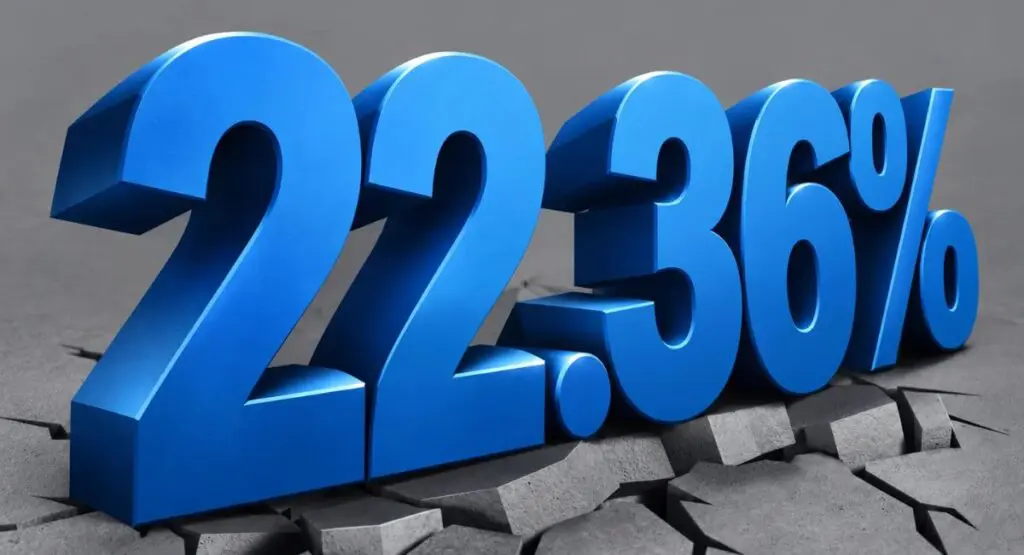
The Federal Reserve consumer credit release published November 6 puts the average rate on accounts charged interest at 22.36% for the third quarter of 2026.
That reading is preliminary and sits about one point below the 23.37% peak from the third quarter of 2024.
23.37%
22.36%
A rate near 22% shapes credit card debt in a few predictable ways.
- Interest takes roughly $1.86 of every $100 of credit card debt each month, before any principal is repaid.
- Minimum payments are built largely from that interest, so the balance shrinks slowly in the early years.
- A 10% federal cap exists only as a proposal. The 10 Percent Credit Card Interest Rate Cap Act has sat in the Senate Banking Committee since February 4, 2025, and a January 2026 call from President Trump did not create one.
How Long a Typical Balance Takes to Pay Off
To make the national figure concrete, we built one example borrower. TransUnion put average credit card debt per borrower at $6,610 in the second quarter of 2026, which we paired with the 22.36% Fed rate.
Our calculation assumes no new charges, no fees, and a minimum payment of interest plus 1% of the balance, with a $35 floor. Issuers use different formulas, so your statement may differ.
225 months
58 months
36 months
24 months
16 months
The gap between the first two rows tells most of the story. Paying the same $189 every month, instead of letting the minimum shrink with the balance, saves about 14 years and roughly $6,600 in interest.
The 12.8% Delinquency Figure Needs Context
Several outlets reported that the share of card balances 90 or more days late rose from 7.6% in the third quarter of 2022 to 12.8% in the first quarter of 2026. Some called it a Great Recession level.
The figure is accurate, but New York Fed researchers explained in an August analysis that the climb comes almost entirely from old, charged-off credit card debt.
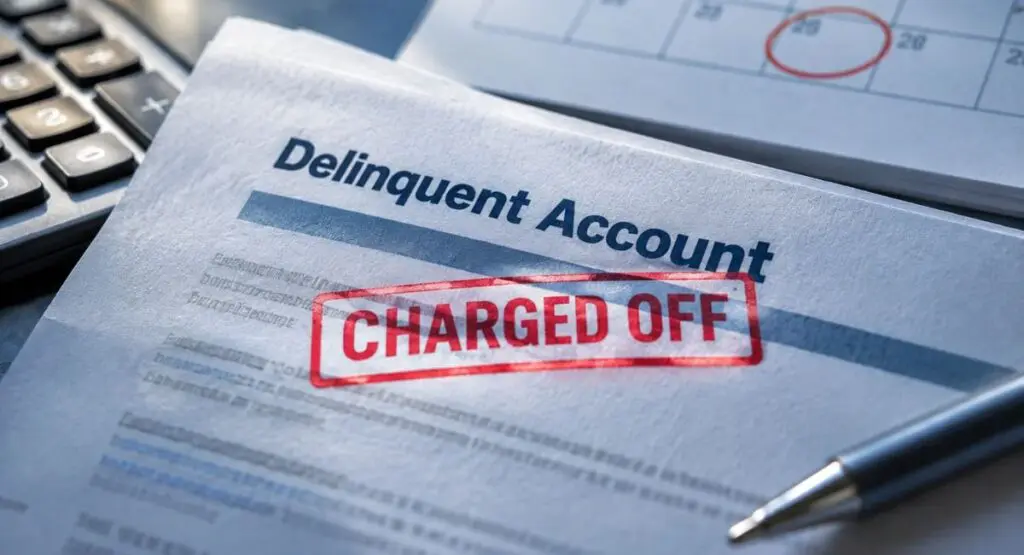
A lender typically charges off a card after 120 to 180 days of missed payments, removing it from its books while the borrower still owes it.
More than 23 million Americans still carry charged-off credit card debt.
A better gauge of new trouble is the flow into serious delinquency. Over the year ending in the second quarter of 2026, 6.97% of balances newly crossed 90 days late, barely changed from 6.93% a year earlier. In our view, the honest summary is elevated but stable.
Your Statement Already Shows Your Payoff Date
Federal rules require most card statements to estimate how long your credit card debt will take to repay at the minimum. Under Regulation Z repayment disclosure rules, a Minimum Payment Warning must show that repayment time and the total cost.
The same box usually lists a monthly payment that would clear the balance in about three years, along with the interest you would save.
Issuers may leave that line out when the minimum payment already pays off the card in three years or less. The statement must also list a toll-free number for credit counseling information.
The printed estimate assumes you add no new purchases. Every charge made after the statement date pushes your real payoff date later than the one shown in the warning box.
What We Would Do With a Balance Today
No plan fits every household, and a balance built during a job loss calls for a different conversation than one built over years of small charges.
For most people carrying credit card debt, though, the math points in one direction.

Even a modest cut, such as trimming the grocery bill with the 5 4 3 2 1 grocery shopping method, sends more money to the card each month.
Frequently Asked Questions
Check Your Own Payoff Date Before the Next Report
The New York Fed will publish third-quarter figures on November 10, and the national total will move again, up or down.
For a household carrying credit card debt, one line on the latest statement matters far more than that headline.
Find the Minimum Payment Warning, note the years it shows, and compare it with the payoff time at a fixed payment you can keep.
On a tight budget, like the one we examined in whether you can live on $2,000 a month, even $50 more each month moves the finish line.
Write the new date down, then check it when the next statement arrives.