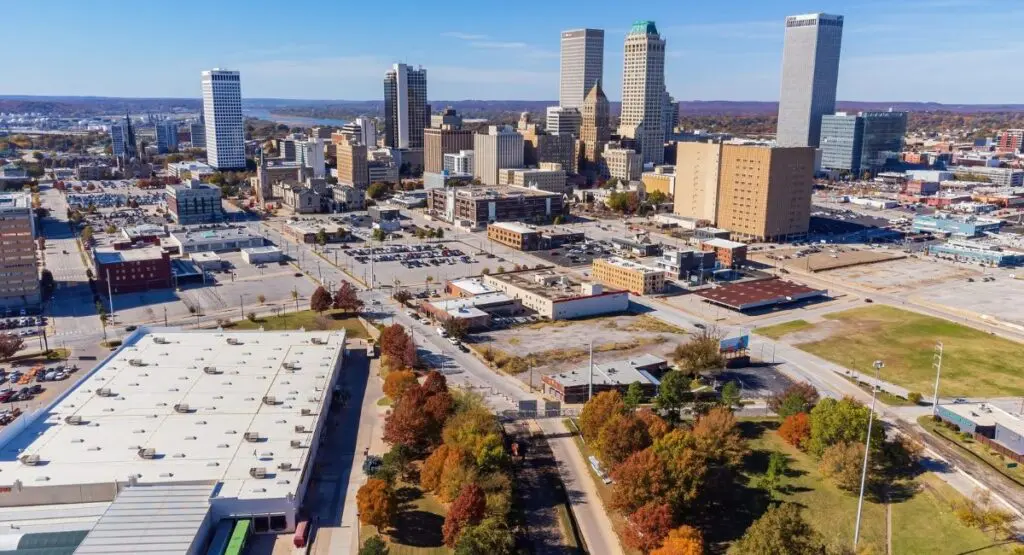
About 4,000 remote workers have now taken an offer that sounded like a gimmick when it launched in late 2018. Tulsa Remote pays eligible people $10,000 to move to Tulsa, Oklahoma, and live there for one year. Most of them stay long after the year ends.
Allison Irby Vu, a single mother who left the Washington, D.C., suburbs in 2021, explained in a first-person essay for CNBC why she and her son stayed, and community mattered more to her than the money.
Below, we look at who qualifies, how the payments arrive, what the retention numbers count, and what $10,000 is worth after taxes.
Who Qualifies for the $10,000 Offer

The program is built for people who already have a job. Tulsa Remote does not place anyone in work, so the remote position must exist before the application does.
The official program details and the member terms list every condition below.
- Be at least 18 and authorized to work in the United States.
- Hold a full-time remote job with an employer based outside Oklahoma.
- Have lived outside Oklahoma for a full year before applying.
- Relocate within 12 months of approval.
- Work an average of 30 or more hours per week during the program year.
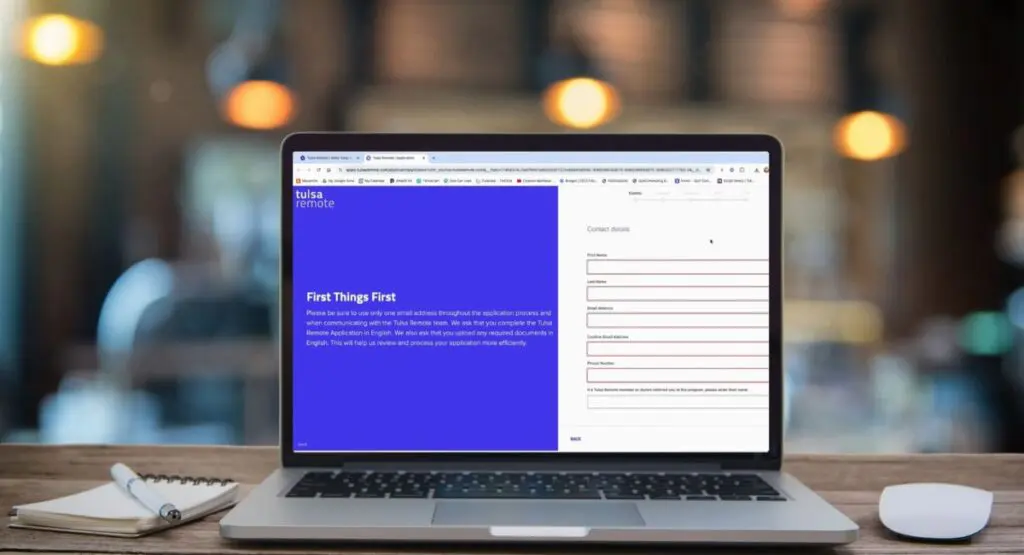
- Pass a video interview, a background check and income verification.
Rideshare and delivery gigs do not qualify. Reviews take about four weeks and verification up to three more, so expect several months between applying and the first deposit.
For a closer look at the Tulsa Remote experience, Libryja Jones explains the program’s eligibility rules, application process, benefits and what happens after the required first year. The video was published in December 2024, so applicants should verify current requirements on the official program website.
The Money Arrives in Pieces Over a Full Year
Renters get no check on moving day. Under the program terms and conditions, the monthly option splits the $10,000 into three types of direct deposit.
| Payment | Amount | When it arrives |
|---|---|---|
| Relocation incentive | $2,500 | After the move and proof of Tulsa residency |
| Monthly payments | $500 × 12 = $6,000 | Each month of the program year |
| Completion incentive | $1,500 | After 12 consecutive months |
| Total | $10,000 | Spread across roughly a year |
Homebuyers can take the balance as a lump sum after closing on a home they live in and do not rent out for a year. Payments also require completing program surveys and meeting staff in person within 90 days.
Three quarters of the money arrives only as the months pass, so the schedule itself rewards staying.
Philanthropy, Not City Hall, Pays Most of the Bill
Headlines say Tulsa pays people to move, which suggests a line in the city budget.
The program states in its FAQ that funding comes primarily from the George Kaiser Family Foundation, with additional money through the Oklahoma Remote Quality Jobs Incentive Act.
Economist Timothy Bartik of the W.E. Upjohn Institute estimated in 2025 that each dollar spent returns more than $4 in benefits to existing Tulsa residents. He put the cost at about $36,000 per job created, against $218,000 for typical business incentives.
An induced move is a relocation that would not have happened without the incentive. Bartik estimated that 58% to 70% of Tulsa Remote participants fit that description, so roughly 30% to 42% would likely have moved anyway.
Rising rents partly offset the gains, the study noted, and results could differ where zoning limits new housing.
How Many Remoters Stayed, and Why the Numbers Differ
Retention claims about Tulsa Remote range from 75% to 98%, and all of them can be accurate at once. Each figure counts a different group over a different period.
| Figure | What it counts | Reported by |
|---|---|---|
| 98% | Members who completed their program year in Tulsa | Tulsa Remote, 2025 impact report |
| 90% | Participants who stayed past the one-year requirement | Local TV coverage, October 2026 |
| 80% | Members still in Tulsa after two years, among survey respondents | Tulsa Remote, 2025 impact report |
| 75% | Everyone who joined since 2019 and still lives in Tulsa | Local TV coverage, October 2026 |
The 2025 Economic Impact Report, which counts 3,972 members as of December 2025, bases its retention rates on post-program surveys. Movers who left may be less likely to answer, so we treat the survey figures as an upper estimate and give the 75% long-run figure the most weight.
What Keeps Remote Workers in Tulsa After the Grant Ends
Money and belonging appear to work together.

A 2022 Brookings summary of survey research by Harvard, University of Maryland and Copenhagen Business School scholars found that 77% of recent movers expected to stay another year, against 52% of accepted applicants who had not yet moved.
- Cheaper housing. Census figures for Tulsa show a median gross rent of $1,052 for 2020 through 2024, compared with $1,933 in Los Angeles. California is the top origin state for applicants.
- Real income gains. Adjusted for rent, mover incomes grew about $26,500 a year more than the comparison group.
- A built-in network. Members get a three-year coworking membership and monthly events, and volunteering rose among movers.
A recent Instagram video from Tulsa-based creator Homes by Sabrina offers a local perspective on why remote professionals choose the city, highlighting its lifestyle, growing community and appeal beyond the $10,000 relocation incentive.
View this post on Instagram
Source: U.S. Census Bureau, 2020–2024 figures.
The $881 monthly rent gap equals $10,572 a year, more than the grant itself before taxes. Median rent includes older leases, though, so a newcomer will likely pay more in either city.
What the $10,000 Is Worth After Taxes
The program terms treat the payments as taxable income, with nothing withheld and a Form 1099-MISC at tax time. Take a hypothetical single filer in tax year 2026.
- Salary of $85,000, the median member income the Economic Innovation Group reported in 2021.
- After the 2026 standard deduction of $16,100, taxable income is $68,900, or $78,900 with the grant.
- Both amounts fall in the 22% federal bracket, which covers $50,401 to $105,700, so the grant adds about $2,200 in federal tax.
- Oklahoma cut its top rate to 4.5% for 2026, and that rate applies above $7,200 of individual income, adding about $450.
$10,000
−$2,200
−$450
Hypothetical single filer earning $85,000 in tax year 2026. Actual taxes depend on individual circumstances.
That leaves roughly $7,350. We suggest setting aside a quarter of each deposit or raising withholding at work, and money received in 2026 goes on the return you file in 2027. Our guide covers how early you can file that return.
Other Cities Are Copying the Idea With Longer Strings Attached
Cash offers for new residents have multiplied. KPTV reported in October 2026 that the Make My Move website lists more than 100 places with cash offers, and that Cumberland, Maryland, is piloting $20,000 for up to 10 people.
Cumberland splits the money between relocation cash and a down payment or renovations, and recipients must stay at least five years. Evan Starr, a University of Maryland professor who studied Tulsa Remote, warned that some people move only for the money and leave when restrictions expire.
In our view, a bigger check with a five-year lock is a different bargain. Tulsa asks for one year and keeps people through housing costs and community, which a smaller city cannot copy as easily as a dollar amount.
Frequently Asked Questions
Run Your Own Numbers Before You Apply
If you are weighing Tulsa Remote, three figures tell you more than the headline.
Take your current rent minus a realistic Tulsa asking rent, multiply by 12, and check the new rent against the 30% rent rule.
Then add about $7,350 for the grant if you sit in the 22% bracket.
Subtract your estimated Tulsa rent from your current monthly rent.
Multiply the monthly difference by 12 to estimate annual housing savings.
Add about $7,350 for the grant if you sit in the 22% bracket.
Confirm in writing that your employer allows a move to Oklahoma, because losing remote status stops the payments.
Most people who stayed were not held there by $10,000 in installments. Cheaper housing and a community they did not have before did that work.