
Every January, the same questions arrive along with the W-2 forms. How soon can I file, and how soon will the money land?
If you are asking how early you can file your federal income tax return in 2027, the answer comes in two parts.
You can prepare your 2026 return as soon as your documents are complete, but the IRS will not accept or process it until the 2027 tax season opens.
As of early November 2026, the agency has not named that date. Recent seasons opened in the last week of January, and the deadline is Thursday, April 15, 2027.
2027 Filing Season at a Glance
Expected opening
Late January
Not officially announced
Filing deadline
April 15, 2027
Thursday
The 2027 Tax Season Start Date Is Not Set Yet
No official start date exists yet for the 2027 filing season. The IRS normally names the date in early January, only a couple of weeks before returns start flowing.
In 2026, the agency announced on January 8 that the season would open Monday, January 26, and a year earlier it picked Monday, January 27, 2025.
| Filing season | Returns for tax year | Opening day | Date announced |
|---|---|---|---|
| 2024 | 2023 | Monday, January 29, 2024 | January 8, 2024 |
| 2025 | 2024 | Monday, January 27, 2025 | January 10, 2025 |
| 2026 | 2025 | Monday, January 26, 2026 | January 8, 2026 |
| 2027 | 2026 | Not announced | Not announced |
All three recent seasons opened on the last Monday of January. In 2027, the matching Monday would be January 25.
Treat that as my reading of the calendar, not an IRS date. Until the agency publishes its announcement, any specific day is a forecast.
Important: January 25, 2027, is a calendar-based estimate, not an official IRS filing date. Check the agency’s announcement before submitting your return.
Preparing Your Return Early Is Not the Same as Filing It

Tax software will let you finish a return in early January, but finishing is not filing.
The IRS does not process electronic returns before opening day, so a completed one simply waits.
Step-by-step Form 1040 tutorial showing how to prepare a federal income tax return. The example covers tax year 2025, so check for updated forms and rules before filing your 2026 return.
The same January 2026 announcement showed how the early weeks worked last season.
- IRS Free File, the guided partner software for qualifying incomes, began taking returns on January 9.
- Free File Fillable Forms, which has no income limit, opened on January 26 alongside the IRS.
- The agency said it was phasing out paper refund checks and urged filers to set up direct deposit.
One route from earlier years is gone. IRS Direct File closed in November 2025 and was not offered in the 2026 season. I found no IRS sign of its return for 2027.
Did you know?
The IRS expected about 164 million individual returns during the 2026 season.
Your W-2 Sets the Real Starting Line
In payroll, the W-2 is the last reconciliation of the year. Every pay stub had to add up to the totals in each box, and an error caught in January meant issuing a corrected form.
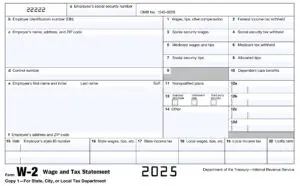
For 2026 wages, employers must furnish W-2 forms by February 1, 2027, because January 31 falls on a Sunday.
Investment paperwork runs later. Brokerage statements on Form 1099-B carried a recipient deadline of February 17 in 2026.
In baseball terms, those forms show up around spring training, well after opening day at the IRS.
Missing your W-2?
If a W-2 never arrives, the IRS tells workers to ask the employer first and to call the IRS if the form is still missing by the end of February. Filing with estimated figures on Form 4852 is allowed, but a later form with different numbers means amending the return on Form 1040-X.
Filing Early Does Not Mean an Early Tax Refund for Everyone
Families who claim the Earned Income Tax Credit or the Additional Child Tax Credit face a hold no matter how early they file. The ACTC is the refundable part of the child tax credit, so it can pay out even when no tax is owed.
Refund timing restriction
Under the Protecting Americans from Tax Hikes (PATH) Act of 2015, the IRS cannot issue refunds on returns claiming the EITC or ACTC before mid-February. The hold covers the entire refund, not only the credit portion.
For the 2026 season, the IRS expected most of those refunds by March 2 for people who filed electronically, chose direct deposit, and had no problems on the return. A similar early March window is likely in 2027, but the IRS has not published a date. With two kids at home, I would budget around the hold rather than a mid-February deposit.
Filing by February 1, 2027, Can Replace the January Estimated Payment
Self-employed workers and others who pay quarterly estimated tax get one real benefit from filing early. According to the 2026 Form 1040-ES, the final 2026 estimated payment is due January 15, 2027, but you can skip it if both conditions hold.
- Your 2026 federal income tax return is filed by February 1, 2027.
- The entire balance due is paid with that return.
For tradespeople and small service businesses, January estimated payments are a fixture on the calendar. The skip option sounds tidy, yet it only works when every 1099 and receipt is in hand by the end of January. Miss the February 1 filing after skipping the payment, and the quarter can carry an underpayment penalty. For most people, paying on January 15 is usually the safer plan.
Key 2027 Tax Filing Deadlines for Tax Year 2026
Under the IRS rule on when individual returns are due, a weekend or holiday on the 15th pushes the deadline to the next business day. April 15, 2027, is a Thursday, so nothing shifts.
Your 2027 Tax Calendar
Key milestones for the 2026 federal income tax return
JAN 15
Final 2026 estimated tax payment
LATE JANUARY
Expected IRS filing season opening
Date not announced
FEB 1
Employers furnish W-2 forms
MID-FEBRUARY
EITC and ACTC refund hold begins to lift
Exact release dates not announced
APR 15
Federal filing and payment deadline
JUN 15
Deadline for qualifying taxpayers abroad
OCT 15
Extended filing deadline
Green: scheduled deadline | Gold: date awaiting IRS announcement
| Date | What happens | Status |
|---|---|---|
| Friday, January 15, 2027 | Final 2026 estimated tax payment due | Confirmed |
| Late January 2027 | IRS begins accepting 2026 returns | Not yet announced |
| Monday, February 1, 2027 | Employers must furnish 2026 W-2 forms | Confirmed |
| Mid-February 2027 | Earliest release of EITC and ACTC refunds | Set by law, day not announced |
| Thursday, April 15, 2027 | Filing and payment deadline, Form 4868 extension request due | Confirmed |
| Tuesday, June 15, 2027 | Extended date for qualifying taxpayers abroad | Confirmed |
| Friday, October 15, 2027 | Extended returns due | Confirmed |
An extension gives more time to file, not more time to pay. Americans abroad who qualify for the automatic two-month extension still owe interest on unpaid tax from April 15.
Remember: A filing extension does not extend your tax payment deadline. Interest may apply to unpaid balances after April 15.
When Filing Your Taxes Early Helps, and When to Wait

Every delay has a price. A refund that sits unclaimed while you carry a credit card balance means more interest each idle week, and with credit card rates still near 20%, that cost adds up.
- File your federal income tax return early when a refund is coming and every form you expect has arrived.
- If identity theft worries you, file early and consider an Identity Protection PIN, a six-digit number that blocks others from filing with your Social Security number.
- Wait if you hold investments and expect 1099-B forms or a corrected W-2.
- Owe money? Filing in February and scheduling payment for April 15 keeps the cash in your account longer.
Investment sales can also create tax obligations that are easy to overlook. Profits from selling gold bars, for example, can be taxed differently from gains on stocks.
File early when…
You expect a refund, have every required tax document, and your return is ready to submit.
Consider waiting when…
You expect brokerage statements, corrected forms, or other documents that could change the figures.
One Number to Check Before January
The most useful step right now takes about five minutes. Find the federal income tax withheld for the year to date on your latest 2026 pay stub, then compare it with the total tax on your 2025 return.
A big gap in either direction tells you whether to expect a refund or a bill, while there are still paychecks left to adjust withholding. When your W-2 arrives, Box 2 should match the year-to-date federal withholding on your final December stub.
Your Pre-Filing Checklist
✓ Review federal withholding on your latest pay stub.
✓ Compare it with last year’s total tax.
✓ Collect all W-2 and 1099 forms before filing.
✓ Confirm your bank details if expecting a direct deposit.
For a worked example of how withholding shapes take-home pay, see my breakdown of what $100,000 a year looks like after taxes.